
26/11/2026 by Marijke 0 Comments
Your Skin: More Than Just the Outer Layer
Your skin is much more than what you see in the mirror. It is a living, communicating organ that plays an essential role in your immunity, hormonal balance and interaction with the outside world.
We often think of our skin in terms of appearance. We want it to look healthy, smooth and youthful. We buy creams, protect it from the sun and sometimes turn to cosmetic treatments to reduce the visible signs of ageing.
But have you ever considered what your skin actually does for your health?
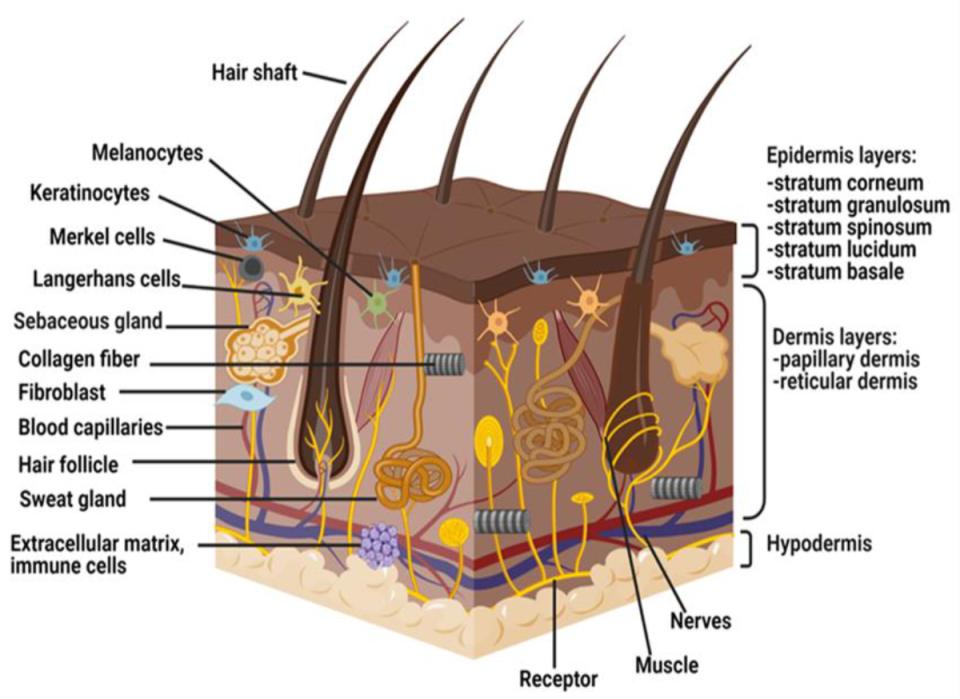
Your skin is your largest organ and one of the most important interfaces between your body and the outside world. It is a protective barrier, an immune defence system, a sensory organ and an active participant in hormonal and nervous-system communication.
From the perspective of Psychoneuroimmunology (PNI), the skin is particularly interesting because it illustrates how closely our different body systems work together.
Understanding this connection may change the way you look at your skin – and the way you care for it.
1. Your skin: an active part of your immune system
Your skin is your first line of defence against the outside world.
It protects you against microorganisms, environmental pollutants, chemicals and physical damage. But it does much more than simply keep unwanted substances out.
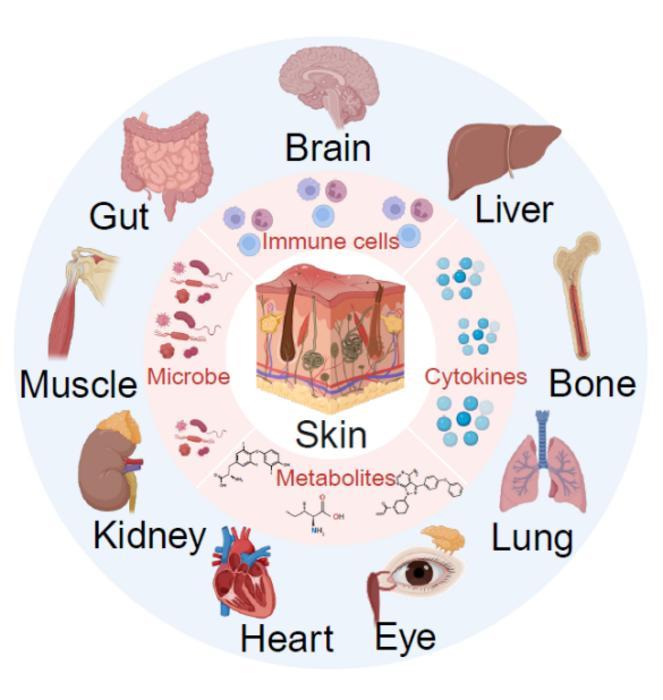
The skin contains specialised immune cells that recognise potential threats and help coordinate an immune response. It also communicates with the nervous system and other organs through chemical messengers and inflammatory signals.
Your skin therefore participates actively in maintaining your body's defence and balance.
When the skin barrier becomes damaged or chronically inflamed, its protective function can be compromised. This can influence local immune responses and contribute to inflammatory skin conditions.
Taking care of your skin is therefore not merely a beauty routine. It is part of supporting your body's natural defence system.
2. Your skin and your hormones: particularly important during menopause
Here is something many women may not know: your skin is not only influenced by hormones; it can also produce certain hormones locally.
Skin cells contain enzymes that participate in the conversion of hormone precursors into active oestrogens. This local hormone activity is particularly interesting when we consider menopause.
During menopause, ovarian oestrogen production declines significantly. This affects many tissues throughout the body, including the skin.
Oestrogen plays an important role in maintaining:
Collagen production and skin thickness.
Skin elasticity and hydration.
Wound healing and tissue repair.
The structure and function of the skin barrier.
As oestrogen levels decline, women may notice thinner, drier skin, reduced elasticity and changes in skin texture.
Local oestrogen production within the skin remains relevant, although it cannot replace the systemic hormonal production of the ovaries.
This is why skin changes after menopause are not simply cosmetic. They reflect biological changes within the tissue itself.
For women approaching or experiencing menopause, understanding this connection is an important part of taking a broader view of health.
3. Your skin, your nervous system and stress
Have you ever noticed how your skin reacts when you are stressed?
Perhaps you experience redness, itching, flare-ups or increased sensitivity.
This is not a coincidence.
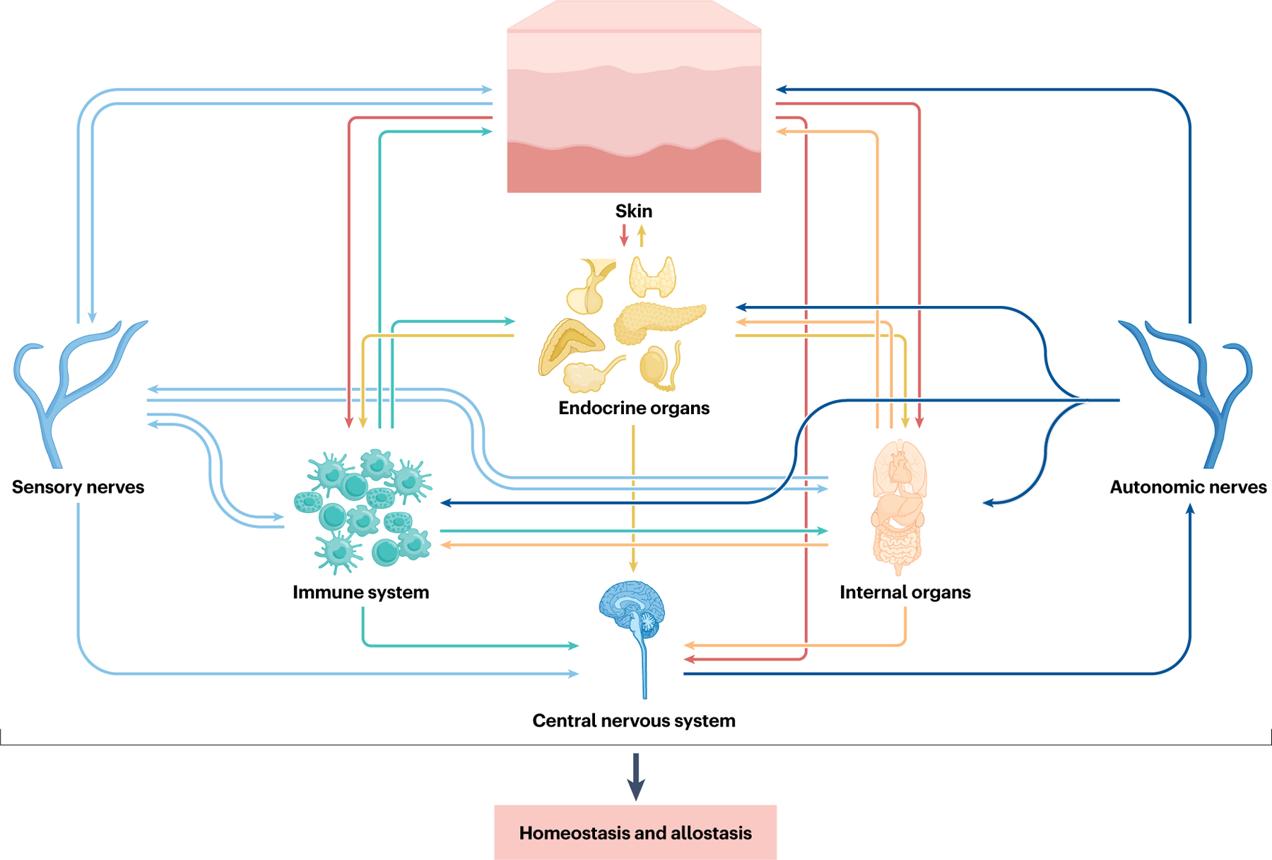
Your skin and nervous system are closely connected. They communicate through sensory nerves, neurotransmitters, hormones and inflammatory messengers.
Stress can influence skin barrier function, inflammation, immune responses and wound healing. In turn, persistent skin problems can become an additional source of stress.
This creates a two-way relationship between the brain and the skin.
From a PNI perspective, it is a beautiful example of how psychological, neurological, immunological and endocrine processes interact.
We cannot always separate what happens in our mind from what happens in our body.
This is also why supporting recovery, sleep, stress regulation and overall resilience can be relevant to skin health.
4. Tattoos, Botox and fillers: informed choices matter
Our skin is living tissue. Every intervention deserves consideration, particularly when it involves repeated or long-term exposure.
This does not mean that every cosmetic treatment is harmful. It means understanding what we are choosing and being aware of the possible consequences.
Tattoos
Tattoo pigments are introduced into the skin, where some particles can remain for many years. Research has shown that tattoo pigments and their breakdown products can migrate to nearby lymph nodes.
Lymph nodes are important parts of our immune system. This makes the subject scientifically interesting, but research is still developing. Findings from animal studies and laboratory research do not establish that tattoos cause long-term immune disorders in humans.
Nevertheless, tattooing is not biologically neutral. Infection, allergic reactions and inflammatory responses are recognised risks.
Botox
Botulinum toxin works by temporarily blocking the release of acetylcholine, a neurotransmitter involved in communication between nerves and muscles.
This reduces muscle contraction and can soften expression lines.
However, it is important to understand that this treatment deliberately changes nerve-to-muscle signalling. Possible adverse effects include local muscle weakness and eyelid drooping. Rare but serious complications can occur.
There is currently insufficient evidence to claim that ordinary cosmetic Botox use disrupts the body's entire hormonal or immune system.
Dermal fillers
Fillers are used to restore volume or change facial contours. Their risks depend on the material, injection site, technique and practitioner.
Apart from swelling, bruising and inflammatory reactions, one particularly serious complication is accidental injection into a blood vessel. This can block blood flow and, in rare cases, cause tissue damage, blindness or stroke.
Choosing a qualified medical professional and understanding the product and its risks are essential.
An important question to ask ourselves is:
When we intervene in living tissue, do we fully understand the possible consequences, particularly when treatments are repeated over many years?
Informed choices are always better than choices based solely on appearance or trends.
5. PFAS: the environmental chemicals we should know about
Our skin is an impressive protective barrier, but it is not completely impermeable.
We are exposed to numerous synthetic chemicals through our food, drinking water, air and everyday products.
One group deserves particular attention: PFAS, or per- and polyfluoroalkyl substances.
Often called 'forever chemicals', many PFAS break down extremely slowly and can persist in the environment. Certain PFAS have been associated with adverse health effects, including endocrine disruption.
Some have also been used in cosmetics and personal-care products.
Research into skin absorption is still developing. The extent of dermal absorption varies considerably between different PFAS compounds and formulations. For many PFAS, food and drinking water are more important exposure routes than cosmetics.
So what can we do?
Become more aware of the ingredients in the products we use regularly.
Avoid unnecessary exposure where practical.
Choose products from manufacturers that are transparent about their ingredients.
Remember that environmental exposure comes from many different sources, not just skincare.
Preventive health is not about living in fear of chemicals. It is about understanding our environment and making informed choices wherever possible.
6. Taking care of your skin means taking care of your health
Healthy skin is supported by much more than the products we apply externally.
Our daily choices matter.
Consider the following:
Nutrition: A varied diet provides the proteins, essential fatty acids, vitamins, minerals and antioxidants needed for normal skin structure and repair.
Sleep and recovery: Adequate sleep supports tissue maintenance and the regulation of inflammatory processes.
Stress management: Chronic stress can affect skin barrier function, inflammation and healing.
Movement: Regular physical activity supports circulation and overall metabolic health.
Sun protection: Protecting your skin against excessive UV exposure helps reduce premature ageing and the risk of skin cancer.
Gentle skincare: Avoiding unnecessary irritation and maintaining the skin barrier are important foundations.
There is no single miracle cream or treatment that can replace these daily foundations.
7. Looking at the bigger picture: the PNI connection
Your skin is an excellent example of what Psychoneuroimmunology teaches us: the different systems of our body do not operate independently.
The skin communicates continuously with:
- The nervous system, through sensory nerves and stress responses.
- The immune system, through specialised immune cells and inflammatory signalling.
- The endocrine system, through hormone receptors and local hormone production.
- The external environment, through its protective barrier and sensory functions.
Changes in one system can influence the others.
This is why we should not look at skin health in isolation. Hormonal changes, chronic stress, inflammation, lifestyle and environmental exposures all belong to a much bigger picture.
At FlexHealth Academy, we believe in understanding these connections and taking responsibility for the choices that support our health.
A final thought
Your skin tells a story. It reflects age, environment, lifestyle and the many biological processes taking place within your body.
Instead of focusing exclusively on how your skin looks, perhaps it is time to pay more attention to what it does.
Especially as we grow older, caring for our skin is part of caring for our long-term health, vitality and resilience.
Healthy ageing is not about looking younger at all costs. It is about supporting the body that carries us through life.
And that starts with the choices we make every day.
Want to understand more about how your lifestyle, stress and biological systems influence your health? Visit our page https://www.flexhealthacademy.com/consultation to discover how we can help you look at the bigger picture.
FH Academy - Inspiring people to live with vitality.

Comments